
If there were only one number to gauge your overall health, fitness, and longevity, it would be your VO₂max—the maximal rate at which your body consumes oxygen during intense exercise. VO₂max captures how well your heart, lungs, blood vessels, and muscles work together to take in, transport, and use oxygen, integrating cardiovascular, pulmonary, and musculoskeletal performance into a single, powerful metric.
What Does VO₂max Measure?
VO₂max (maximal oxygen consumption) represents your body’s peak capacity to generate energy aerobically. A higher VO₂max indicates a stronger heart that pumps more blood per beat, lungs that deliver oxygen more efficiently, and muscles with greater mitochondrial density to extract and use that oxygen. The result is greater endurance and metabolic efficiency across every system that sustains life.
Why It Matters for Health and Longevity
Cardiorespiratory fitness, measured by VO₂max, is one of the most robust predictors of all-cause and cardiovascular mortality—often surpassing traditional risk markers such as smoking status, blood pressure, or diabetes. Research shows that every incremental improvement in aerobic capacity (about 3.5 mL/kg/min) can reduce overall mortality risk by roughly 10%. Even modest improvements yield meaningful protection against heart disease, metabolic dysfunction, and premature aging.
How Does VO₂max Testing Work?
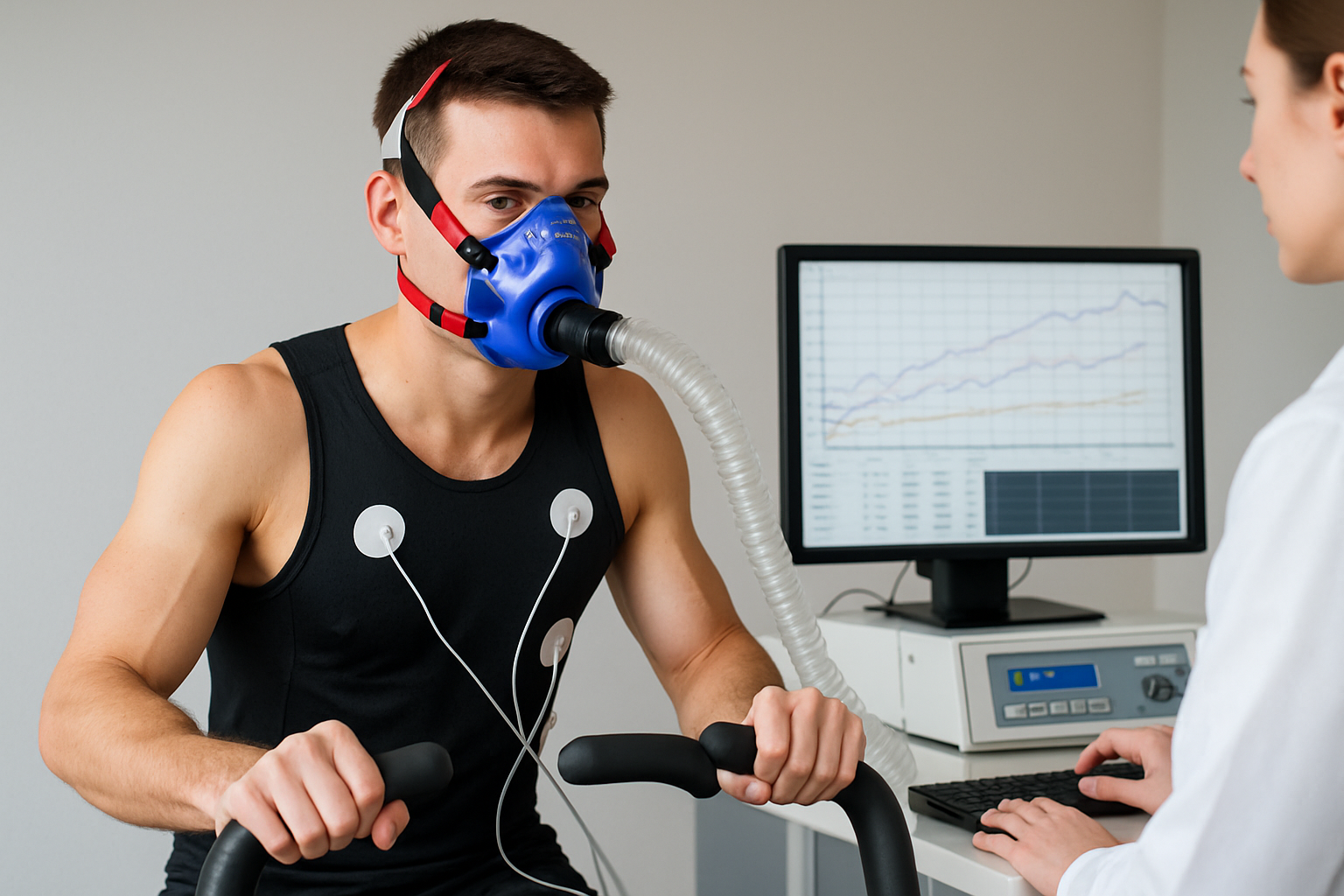
During a VO₂max test, you’ll exercise on a treadmill or stationary bike while wearing a mask that measures oxygen uptake and carbon dioxide output in real time. By analyzing your breath-by-breath gas exchange as intensity increases, clinicians can calculate your VO₂max and determine which physiological systems—cardiac, pulmonary, or muscular—are limiting performance.
Exercise Types That Boost VO₂max
Raising your VO₂max doesn’t require rigid training, but it does require consistent challenge to your heart, lungs, and large muscle groups. Different approaches work for different people:
- Steady aerobic activity (brisk walking, cycling, rowing, or swimming) conditions the cardiovascular and pulmonary systems for sustained effort.
- Interval training—short, intense bursts alternating with recovery—drives powerful adaptations in cardiac output and mitochondrial efficiency.
- Functional or mixed-intensity activity, like hiking hills or vigorous recreational sports, improves VO₂max when heart rate and breathing stay elevated for extended periods.
The key is variety and consistency in activities you enjoy, which supports both adherence and physiological adaptation.
How We Use VO₂max at Hyperbaric Medical Solutions
At Hyperbaric Medical Solutions, VO₂max testing serves as a clinical biomarker of resilience and recovery. Once we know your number, we can tailor exercise recomendations, supplementation, and metabolic strategies to address your most limiting system—whether cardiovascular, pulmonary, or muscular.
Tracking VO₂max over time provides an objective lens into how lifestyle interventions, nutrition, and targeted therapies are improving your whole-body vitality and long-term health trajectory.