What Hyperbaric Oxygen Therapy Feels Like (2026)
If you have been considering Hyperbaric Oxygen Therapy (HBOT) but are unsure what the experience actually involves, you are not alone. First-time patients often arrive with questions about what they will see, hear, and feel during a session.
This article walks you through each phase of an HBOT session so you can step into the chamber with confidence. From the initial pressurization to the quiet treatment phase and the gradual return to normal pressure, knowing what to expect can make the process feel far more comfortable.
Key Takeaways: What Hyperbaric Oxygen Therapy Feels Like
- HBOT sessions involve breathing 100% medical-grade oxygen inside a pressurized chamber for roughly 90 to 120 minutes.
- Ear fullness during pressurization is the most commonly reported sensation, similar to the feeling of changing altitude in an airplane.
- Hyperbaric Medical Solutions provides certified hyperbaric technicians who guide you through each phase to keep you comfortable.
- Most patients spend treatment time relaxing, watching television, or resting comfortably in a climate-controlled chamber environment.
How Does a Hyperbaric Oxygen Therapy Session Work?
Hyperbaric oxygen therapy (HBOT) is a medical treatment in which you breathe 100% medical-grade oxygen while the pressure around you is raised well above normal. That pressure is typically 2.0 to 2.4 atmospheres absolute (ATA), or roughly twice the pressure at sea level.
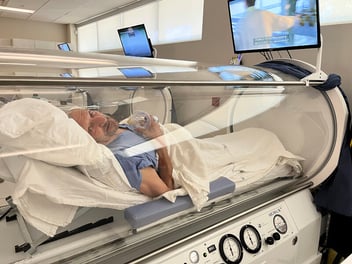
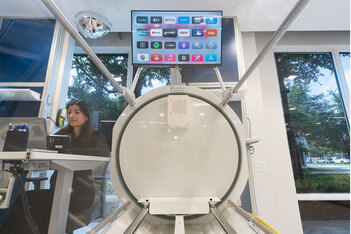
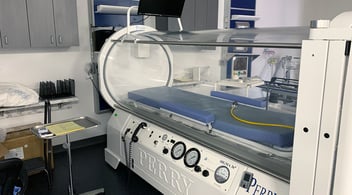
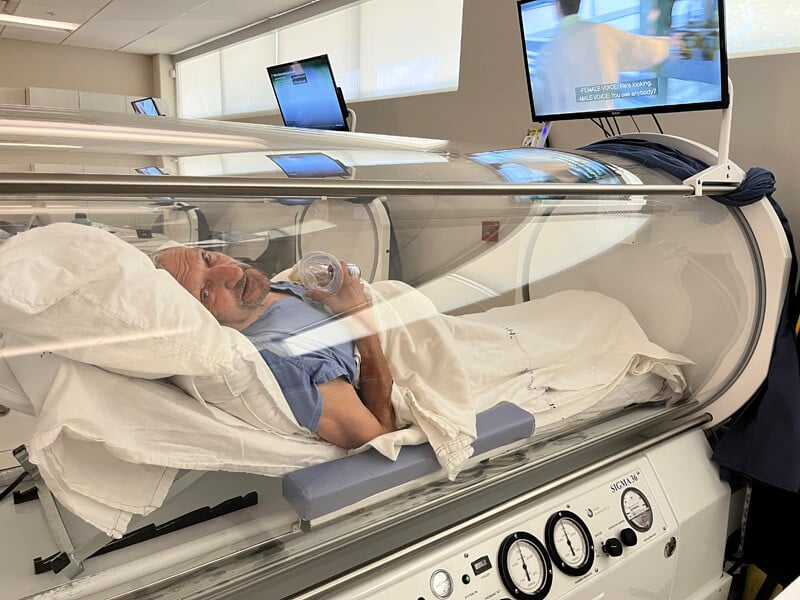
Most HMS treatments take place in a monoplace chamber, a clear acrylic chamber for one person that is filled entirely with oxygen, so there is no mask or hood to wear. Our Randolph, MA location also has a multiplace chamber, a larger walk-in room where several patients are treated together. In that chamber, the room is pressurized with air and each patient breathes oxygen through a mask or hood.
The pressure is what makes the oxygen therapeutic. At sea level, nearly all the oxygen in your blood is carried by hemoglobin in red blood cells. That hemoglobin is already about 97% saturated, so breathing extra oxygen at normal pressure adds very little. Under pressure, far more oxygen dissolves directly into the plasma, the liquid portion of the blood. At treatment pressures, the oxygen level in arterial blood rises roughly 10- to 15-fold. That dissolved oxygen also diffuses several times farther into tissue than it normally can. It reaches areas where swelling, damaged vessels, or poor circulation keep red blood cells from delivering enough.
A single session saturates tissue with oxygen. A course of treatment produces the lasting change, usually 20 to 40 sessions depending on the condition. Repeated exposure stimulates new blood vessel growth (angiogenesis), mobilizes the body’s own stem cells, reduces swelling and inflammation, and strengthens the white blood cells that fight infection. This is why HBOT is prescribed as a series rather than as a one-time treatment.
What Does the Compression Phase Feel Like?
Compression is the first stage of your HBOT session. During this phase, 100% medical grade oxygen flows into the chamber and the pressure gradually increases.
The most common sensation is a feeling of fullness in your ears, much like what you experience when an airplane ascends or when you drive through mountains. Swallowing, yawning, or gently blowing through your nose while keeping your mouth closed can help equalize that pressure.
At Hyperbaric Medical Solutions, a certified hyperbaric technician monitors you throughout this process and can slow the pressurization rate if you need additional time to clear your ears. We also provide you with a water bottle and the technicians will instruct you to take sips and swallow to help alleviate pressure in the ears. This fullness typically resolves within the first 10 to 15 minutes.
What Happens During the Treatment Phase?
Once the chamber reaches the prescribed pressure, the treatment phase begins. This is the longest portion of the session, and it is also the most uneventful in terms of physical sensation.
You simply lie back and breathe normally. The oxygen-rich environment does its work at a cellular level while you rest. Many patients at HMS watch television on the personal screen paired with each monoplace chamber, select a movie, listen to music, or sleep. We have every streaming service available for you during your treatment and your technician can change the show or movie you are watching whenever you want.
The temperature inside the chamber is managed to maintain comfort. If you feel too warm or too cool at any point, a technician can adjust the airflow. There is no pain, no needles, and no active effort required from you during this phase.
What Happens During Air Breaks?
Air breaks are short pauses at scheduled intervals during hyperbaric treatment when patients breathe regular air instead of pure oxygen. This temporary drop in oxygen may signal cells to activate repair and adaptation pathways, even though oxygen levels remain elevated—a response known as the hyperoxic–hypoxic paradox
What Does Decompression Feel Like at the End of a Session?
Decompression is the final phase, lasting approximately 10 minutes. The technician gradually reduces the pressure inside the chamber to match the surrounding environment.
You may notice a slight popping in your ears as the pressure decreases, along with a gentle cooling of the air inside the chamber. Unlike compression, you generally do not need to actively equalize your ears during this phase. Just breathe normally.
Once the chamber is fully depressurized, the session is complete. Your technician will check your vital signs, including blood pressure and pulse, before you are cleared to change back into your clothes and go about your day.
Are There Any Sensations or Side Effects After an HBOT Session?
After a session, some patients report mild fatigue or a feeling of hunger. These responses are normal and tend to resolve quickly. You can return to your regular activities immediately following treatment.
Temporary vision changes can also occur but are uncommon and short-lived.
Serious side effects such as oxygen toxicity are rare. At Hyperbaric Medical Solutions, comprehensive pre-treatment screening and established HBOT protocols are designed to minimize risk. According to a 2026 phenomenological study published in Healthcare, patients who received thorough orientation before their first session reported significantly reduced anxiety and greater comfort throughout treatment.
How Should You Prepare for Your First HBOT Session?
Preparing for your first hyperbaric oxygen therapy (HBOT) session is straightforward. Avoid eating a large meal or drinking carbonated beverages directly before your appointment to reduce the chance of stomach discomfort during treatment.
During your initial consultation, provide your medical team with a complete list of medications and supplements. Some medications may not be compatible with HBOT, and your physician-led care team will review these with you in advance.
Implanted devices, such as pacemakers, must be reviewed before treatment by a clinician with expertise in hyperbaric medicine to confirm that they can function safely at the planned pressure and meet the manufacturer’s safety specifications
Patient safety is a top priority at Hyperbaric Medical Solutions. Before every session, patients complete a pre-treatment safety checklist, reviewed and signed by both the patient and a staff member. This process includes:
- Changing into 100% cotton scrubs or a gown provided by HMS to comply with chamber fire safety requirements.
- Removing personal items, including electronics, jewelry, and prohibited hair and skincare products.
- Wearing a grounding bracelet to help prevent static electricity buildup.
- Completing a final safety inspection, including a static electricity test performed by a trained technician before each session.
Once these safety checks are complete, you can settle into the chamber for your treatment. HMS provides a comfortable environment with blankets, pillows, and entertainment options to help you feel at ease throughout your session.
What Makes the HBOT Experience at Hyperbaric Medical Solutions Different?
Hyperbaric Medical Solutions uses hard-shell, medical-grade, FDA-cleared monoplace chambers that deliver 100% oxygen at pressures higher than soft or mild alternatives can achieve. This distinction matters because the type of chamber directly affects treatment efficacy.
Each session is supervised by a clinically trained team that includes certified hyperbaric technicians and physician oversight led by Dr. Alan Katz, who chairs the UHMS Committee on Office-Based Hyperbaric Medicine. That level of medical supervision means your treatment protocol is personalized to your specific condition and adjusted based on how you respond.
As a freestanding, physician-led practice, HMS delivers hospital-level clinical standards in a private, patient-centered setting, often at a lower cost than hospital-based HBOT programs. The focus is on your comfort and clinical outcomes from the first consultation through the final session.
In Summary: Knowing What to Expect Inside the Hyperbaric Chamber
Hyperbaric Oxygen Therapy is a calm, non-invasive treatment with predictable sensations at every stage. Ear fullness during compression, quiet rest during treatment, and gentle pressure changes during decompression are the primary experiences most patients report.
If you are curious about whether HBOT may be right for your situation, Hyperbaric Medical Solutions welcomes the conversation. You can request a consultation to have your questions answered by our medical team.
FAQs About What Hyperbaric Oxygen Therapy Feels Like
Does Hyperbaric Oxygen Therapy hurt?
No. HBOT is a non-invasive treatment with no needles or incisions. The only physical sensation most patients notice is temporary ear fullness during the compression phase, which resolves with simple techniques like swallowing or yawning.
Can you sleep during an HBOT session?
Yes. Once the chamber reaches treatment pressure, many patients fall asleep. Hyperbaric Medical Solutions equips each monoplace chamber with a personal television, but resting or sleeping is just as common and perfectly fine during treatment.
How long does a typical HBOT session last?
A standard session lasts between 90 and 120 minutes. This includes the compression phase, the treatment phase at prescribed pressure, and the gradual decompression at the end.
What if I feel claustrophobic inside the chamber?
Monoplace chambers at Hyperbaric Medical Solutions are made of clear acrylic, giving you an open line of sight to the room and your technician throughout the session. If anxiety is a concern, your care team can discuss options to help you feel comfortable before treatment begins.
How soon can I return to normal activities after HBOT?
You can resume your regular routine immediately after a session. Some patients feel mild fatigue or hunger, but these are temporary. Hyperbaric Medical Solutions monitors your vital signs before clearing you to leave, so you know you are ready to go.

Written by Hyperbaric Medical Solutions
Hyperbaric Medical Solutions is a free-standing, independent medical practice, providing hyperbaric oxygen therapy (HBOT). HBOT is an advanced healing therapy that treats conditions that benefit from increased oxygen concentration and absorption in the body....
Read More